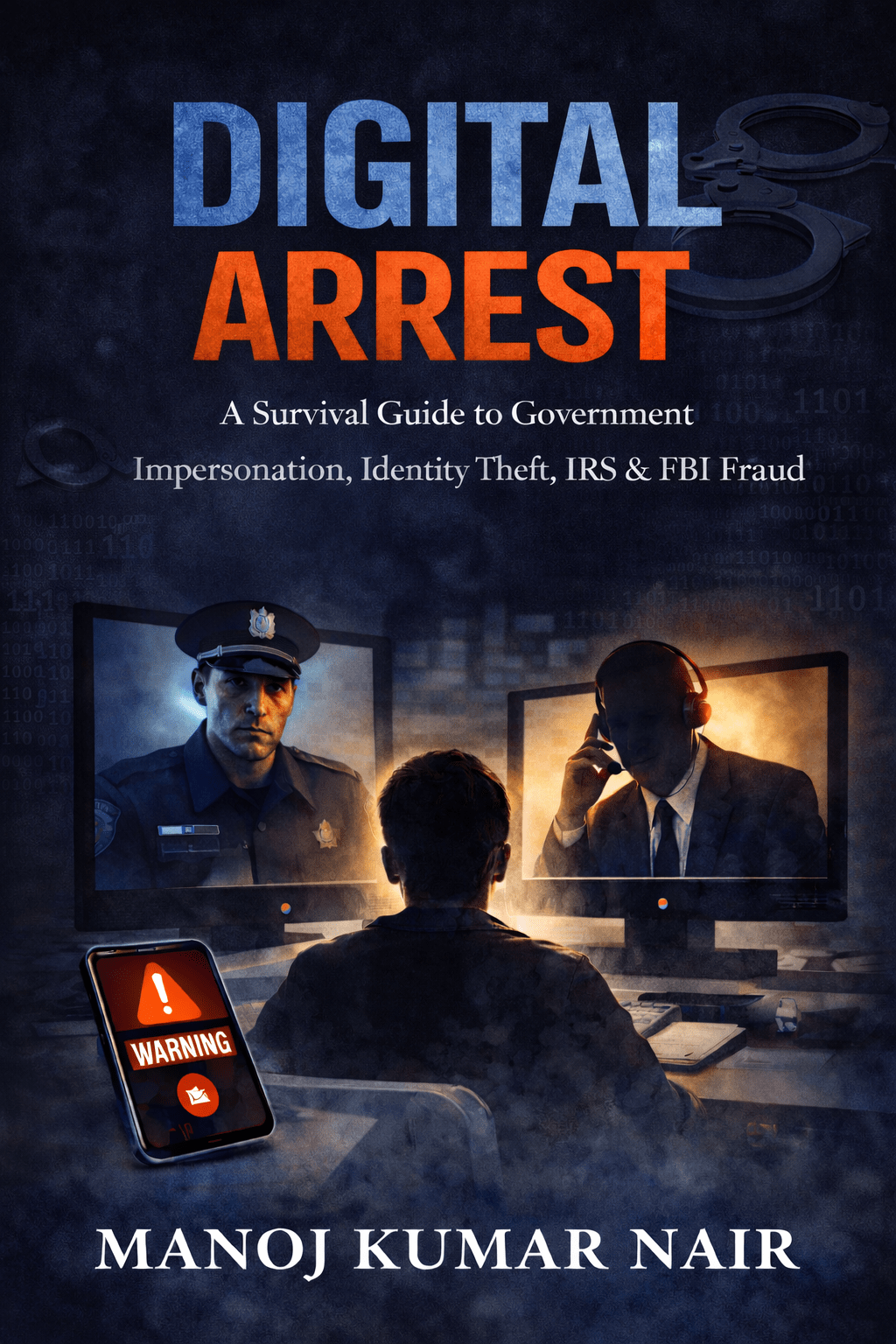
Digital Arrest scam
The phone rings. The caller introduces themselves as an officer from the Cyber Crime Cell, CBI, ED, Customs or local police. They speak confidently, quote your Aadhaar number or bank details, and tell you that your identity has been linked to a serious crime. Within minutes, you are frightened, isolated, and instructed not to disconnect the call because you are now under a “Digital Arrest.”
It sounds unbelievable—until it happens to someone you know.
The Digital Arrest scam has become one of the fastest-growing cyber frauds, targeting professionals, business owners, students, retired citizens, and even government employees. Unlike traditional cybercrime, this scam doesn’t rely on hacking computers. Instead, it hacks human psychology.
In this article, you’ll learn:
- What a Digital Arrest scam is
- How fraudsters operate
- The warning signs you should never ignore
- Why intelligent people become victims
- Practical steps to protect yourself and your family
- Where to learn more and stay informed
What Is a Digital Arrest Scam?
A Digital Arrest scam is a sophisticated social engineering fraud in which criminals impersonate law enforcement agencies, government departments, regulators, or financial institutions. They falsely claim that the victim is involved in a criminal investigation and convince them that they must remain connected on a phone or video call until the “investigation” is complete.
The fraudsters often accuse victims of involvement in crimes such as:
- Money laundering
- Drug trafficking
- Identity theft
- Tax evasion
- Illegal financial transactions
- Fake courier shipments
- Human trafficking investigations
- Cybercrime investigations
The victim is pressured into believing that immediate cooperation is necessary to avoid arrest.
There is no legal concept of a “Digital Arrest” in which authorities force someone to stay on a video call or transfer money to prove innocence. This is purely a psychological tactic used by cybercriminals.
Why Is the Digital Arrest Scam Increasing?
Several factors have contributed to its rapid growth:
1. Increased Digital Adoption
More people now use online banking, digital wallets, UPI, Aadhaar-linked services, and online shopping.
2. Availability of Personal Information
Fraudsters often obtain basic personal information through previous data breaches, social media, or publicly available sources, making their stories appear more convincing.
3. AI and Technology
Modern scammers use AI-generated voices, deepfake videos, caller ID spoofing, and professionally designed fake documents to appear legitimate.
4. Fear-Based Manipulation
Fear disables logical thinking. Once victims believe they are under investigation, they often comply without questioning instructions.
How Does a Digital Arrest Scam Work?
Although individual cases vary, most follow a similar pattern.
Step 1: The Initial Contact
The victim receives:
- A phone call
- WhatsApp call
- Video call
- SMS
- Voice message
The caller claims to represent:
- Police
- Cyber Crime Cell
- CBI
- ED
- Customs
- RBI
- Telecom Authority
- Courier company
Step 2: Creating Panic
The caller says:
- Your Aadhaar has been misused.
- Your SIM card is linked to criminal activity.
- Your bank account received illegal funds.
- A parcel in your name contains drugs or fake passports.
- A warrant has been issued.
The objective is simple:
Make you panic before you think.
Step 3: Isolation
Victims are instructed:
- Do not disconnect.
- Do not tell family.
- Do not contact a lawyer.
- Stay on camera.
- Keep your phone visible.
Isolation prevents victims from seeking advice.
Step 4: Fake Investigation
Fraudsters conduct what appears to be an official investigation.
They may:
- Show fake identity cards
- Display government logos
- Wear police uniforms
- Sit in fake offices
- Share forged court documents
Some even conduct fake video conferences involving multiple impersonators.
Step 5: Money Transfer
Eventually comes the demand.
Victims may be asked to:
- Transfer money for verification
- Move funds to a “safe account”
- Pay security deposits
- Share OTPs
- Reveal internet banking credentials
- Install remote-access software
Once money is transferred, it is quickly dispersed through multiple accounts.
Common Warning Signs
You may be facing a Digital Arrest scam if someone:
- Claims immediate arrest over a phone call.
- Demphasizes secrecy.
- Refuses to let you disconnect.
- Demands video surveillance.
- Requests OTPs.
- Asks for banking credentials.
- Demands cryptocurrency.
- Requests transfers to verification accounts.
- Uses fear to force immediate decisions.
Whenever urgency replaces due process, treat it as suspicious.
Who Becomes a Victim?
One of the biggest myths is that only inexperienced internet users fall for cyber fraud.
Reality tells a different story.
Victims include:
- Retired citizens
- Doctors
- Engineers
- Government officers
- IT professionals
- Teachers
- Chartered accountants
- Students
The scam targets emotions—not intelligence.
Even cybersecurity-aware professionals can become victims under intense psychological pressure.
Psychological Tricks Used by Fraudsters
Cybercriminals study human behavior carefully.
They exploit:
Authority
People naturally obey uniforms and official titles.
Fear
Fear reduces rational decision-making.
Urgency
Victims believe immediate compliance is essential.
Isolation
Removing outside advice increases control.
Shame
Victims hesitate to seek help because they fear embarrassment.
These tactics are identical to those used in many high-value financial frauds worldwide.
Can the Caller Know My Personal Information?
Unfortunately, yes.
Fraudsters may already know:
- Name
- Mobile number
- Address
- Aadhaar details
- PAN
- Employer
- Email address
- Social media profiles
This information often comes from:
- Previous data leaks
- Social media
- Public records
- Phishing attacks
- Illegal data brokers
Knowing personal information does not prove the caller is genuine.
How to Protect Yourself
Protecting yourself starts with awareness.
Never Panic
Fear is the criminal’s biggest weapon.
Stay calm.
Verify Independently
Never trust the phone number provided by the caller.
Instead:
- Search official government websites.
- Call official helplines.
- Visit the nearest police station if necessary.
Never Share
Never disclose:
- OTP
- Password
- PIN
- CVV
- Internet banking credentials
- UPI PIN
Legitimate authorities will never ask for them.
Never Transfer Money
No government agency verifies innocence through bank transfers.
Any such request is fraudulent.
Disconnect Suspicious Calls
You are under no obligation to remain connected.
If uncertain:
Disconnect.
Verify.
Then respond.
Inform Family Members
Many victims lose money because they keep the incident secret.
Discuss suspicious calls with trusted family members.
Report Immediately
If you suspect fraud:
- Contact your bank immediately.
- Report to the national cybercrime reporting system.
- Inform local police.
- Preserve screenshots, call recordings, account numbers, and messages.
Quick reporting improves the chances of recovering funds.
Tips for Senior Citizens
Senior citizens are frequently targeted because fraudsters assume they are more likely to trust authority.
Families should:
- Explain common scams.
- Encourage verification.
- Create a “call before paying” rule.
- Share emergency contact numbers.
Five minutes of conversation can prevent devastating losses.
The Role of Artificial Intelligence
Artificial Intelligence is transforming cybercrime.
Fraudsters increasingly use:
- AI-generated voices
- Deepfake videos
- Automated chat systems
- Fake government documents
- Voice cloning
As technology evolves, awareness becomes even more important.
Final Thoughts
Cybercriminals continue to innovate, but so can we.
The next Digital Arrest scam could target anyone—a colleague, a parent, a friend, or even you. The difference between becoming a victim and staying safe often comes down to a single factor: awareness.
Remember these three rules: Stop. Think. Verify.
No legitimate authority will pressure you to transfer money, remain on an endless video call, or isolate yourself from your family.
Stay informed. Stay alert. Stay safe.
Keywords: Digital arrest scam, Digital arrest in india, Digital arrest meaning, Digital arrest upsc, Digital arrest news, Digital arrest kya hota hai, Digital arrest: The modern cyber scam, How do I complaint about digital arrest, Digital frauds in india, Digital arrest examples, Digital arrest scam updates, What is digital arrest, Digital arrest case study